
Boundary Surveying Before Building Near a Shared Fence
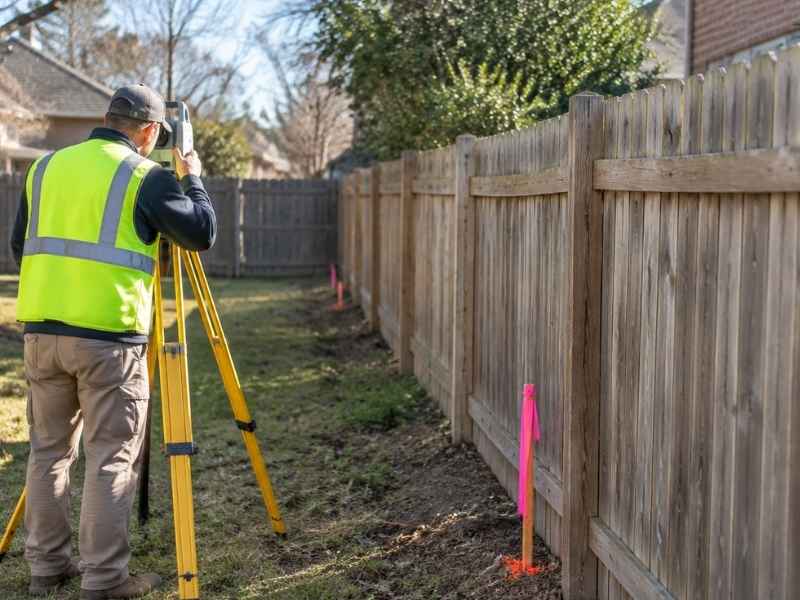
A fence has stood between two yards for thirty years. Everyone treats it as the property line. Nobody ever checked. That’s a common story, and it’s exactly why boundary surveying matters before anyone builds near a shared fence. The fence might be close to the real line. It might not be. Without a survey, there’s no way to know for sure.
Building near a shared fence feels simple. Put up your shed, your deck, or your new fence panel, and stay on your own side. But “your own side” only means something once the real boundary is confirmed.
Why a Shared Fence May Not Show the True Property Boundary
Fences get built for all kinds of reasons. Sometimes an old owner just picked a spot that looked right. Sometimes a fence company set posts where the ground was easiest to dig. Sometimes two neighbors shook hands on a rough guess years ago and never thought about it again.
None of these reasons involve an actual boundary survey. That means a fence can sit a foot or two off from the real line, and it can sit that way for decades without anyone noticing. The fence just becomes the line in everyone’s mind, even though it was never checked against real records.
This is the problem with treating a fence as fact. It might be close. It might be way off. Only a survey tells you which one is true.
How Boundary Surveying Helps Plan Construction Near an Existing Fence
A boundary survey gives you real, measured property lines. A surveyor uses official records and equipment to mark exactly where your land starts and stops. Once you have that information, you know exactly how much space you actually have to work with near the fence.
This matters most when you’re planning to build something. A deck, a shed, a new fence, or even a garden wall all need a clear starting point. If you build based on where the old fence sits, and that fence is off by even a foot, your new structure could end up partly on your neighbor’s land.
Surveying first means you build based on facts. You’ll know your real space before you buy materials or dig a single post hole.
Understanding Space Restrictions When Building Along a Shared Property Line
Finding the boundary is a big step, but it’s not always the last one. Local building rules often require a setback, which means structures have to sit a certain distance from the property line, not right up against it.
There might also be an easement running along that shared area. An easement gives someone, maybe a utility company or even the neighbor, a legal right to use part of that space, even though it sits on your land. Building over an easement without checking first can cause real problems down the road.
Before finishing your design, it helps to check setback rules and easement records alongside your survey results. All three pieces work together to show where you can actually build.
Preventing Construction Disagreements With Neighboring Property Owners
Nobody wants a fight with the person next door. Confirming the boundary before you build is one of the easiest ways to avoid that. When you have a documented survey, both you and your neighbor are working from the same facts, not guesses or old assumptions.
This clears up a lot of confusion before it starts. If your neighbor questions where your new fence or shed sits, you can point to real survey data instead of arguing about who remembers the old fence line correctly. Most disagreements come from uncertainty, and a survey removes that uncertainty for everyone involved.
Sharing this information with your neighbor early, before construction starts, often keeps the whole project friendly instead of tense.
Why Boundary Verification Should Happen Before Construction Plans Are Finalized
Timing matters here. A survey done early, before permits get pulled and materials get ordered, gives you room to adjust your plans if needed. A survey done late, after work has already started, can force expensive changes or even require tearing out something you just built.
Contractors also work better with confirmed measurements in hand. They can plan the project around real boundary lines instead of estimates based on the fence. This avoids delays caused by last minute boundary questions once equipment is already on site.
Getting the survey done first turns boundary information into a planning tool instead of a problem you discover halfway through construction.
Frequently Asked Questions
Does a fence determine the actual property line?
Not always. A fence might sit close to the real boundary, but it was often placed based on guesswork or old agreements, not an official survey. A boundary survey is the only way to confirm the true property line.
Do I need a boundary survey before building near a shared fence?
Yes, it’s a smart step. A survey confirms exactly where your property line sits and gives you accurate information about where construction can safely take place.
How close can I build to my neighbor’s fence?
This depends on your confirmed property line, local setback rules, zoning requirements, and the type of structure you’re building. A survey and a check of local rules will give you the real answer.